How to Prepare Your Chevy for an Indianapolis Winter
Preparing your Chevy for an Indianapolis winter means checking your battery before it fails in the cold, verifying tire tread and pressure, topping off winter-grade windshield fluid, and keeping an emergency kit in the vehicle. Most of this takes under an hour and can prevent the most common winter breakdowns Central Indiana drivers deal with.
Central Indiana winters bring genuine cold snaps, occasional heavy snow, and icy mornings that catch drivers off guard every year. A little preparation in the fall goes a long way toward avoiding the most common winter car problems. Here's what to check before the first hard freeze.
Test Your Battery Before It Fails
Cold weather is when a marginal car battery actually dies, since low temperatures reduce a battery's ability to hold a charge. If your battery is more than three years old, get it tested before winter rather than waiting for a morning it won't start. Most Chevy service departments, including ours, can test battery health in a few minutes.
Check Tire Tread and Pressure
Tire pressure drops as temperatures fall, roughly 1 PSI for every 10-degree drop, which can trigger a low tire pressure warning even without an actual leak. Check your tires when temperatures first turn cold and adjust as needed. Also check tread depth, since worn tires lose traction significantly faster on snow and ice than on dry pavement.
Consider Winter Tires If You Drive in Rougher Conditions
If you regularly drive on unplowed or poorly maintained roads outside Marion County, dedicated winter tires make a real difference in braking and cornering that all-season tires and AWD alone can't fully replicate. If your Chevy stays mostly on well-maintained Indianapolis city streets, quality all-season tires are usually sufficient.
Switch to Winter-Grade Windshield Washer Fluid
Standard washer fluid can freeze in your reservoir and lines during a hard freeze, leaving you without the ability to clear road salt and grime from your windshield. Winter-grade fluid is rated to handle much lower temperatures and is a cheap, easy swap before the season starts.
Check Your Antifreeze and Coolant Levels
Coolant does double duty, preventing your engine from overheating in summer and from freezing in winter. Low coolant levels can lead to engine damage in extreme cold. If it's been a while since your coolant was checked or flushed, it's worth having it inspected before winter arrives.
Keep Your Fuel Tank at Least Half Full
Running low on fuel in cold weather increases the risk of fuel line freeze, and it also means less weight over your tires, which can reduce traction. Keeping your tank at least half full through the winter months is a simple habit that reduces risk on longer or unexpected trips.
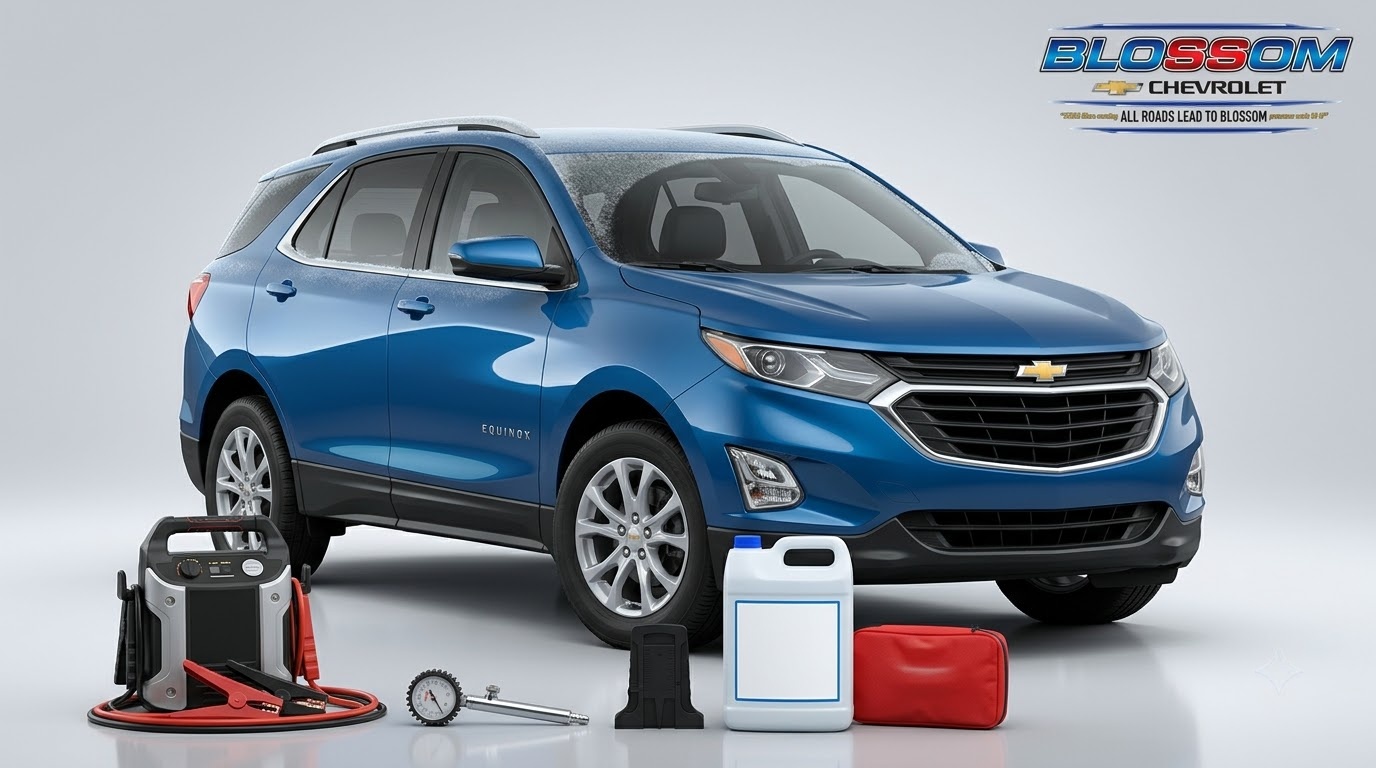
Pack a Winter Emergency Kit
A basic kit, blankets, a flashlight, jumper cables, a phone charger, and some traction aid like sand or cat litter, can make a real difference if you get stuck or stranded. Central Indiana weather can turn quickly, and having these basics on hand costs little compared to the peace of mind.
Test Your Heater and Defroster Early
Don't wait for the first cold morning to discover your heater or defroster isn't working properly. Test both before winter fully sets in, since a slow-clearing windshield is both a safety issue and a frustrating way to start a commute.
Know Your Chevy's AWD or 4WD System
If your Chevy is equipped with AWD or 4WD, understand how it engages, whether it's automatic or requires manual selection, before you actually need it in snow. Reading through your owner's manual or asking our service team ahead of winter beats figuring it out during your first snowstorm of the season.
Schedule a Pre-Winter Service Check
A quick service visit covering battery, tires, fluids, and belts before winter can catch small issues before they become bigger problems during cold weather. Our Indianapolis service team sees a seasonal increase in these checks every fall, and getting ahead of it usually means a shorter wait than waiting until the first cold snap hits.
FAQs
1. How cold does it need to be before my car battery might fail?
Cold weather reduces battery capacity significantly, and a battery already weakening from age is most likely to fail once temperatures drop into the 20s or lower.
2. Do I need winter tires if my Chevy has all-wheel drive?
AWD helps with acceleration traction, but winter tires improve braking and cornering on ice in ways AWD alone doesn't address, especially on rougher roads outside the city.
3. Why does my tire pressure warning light come on more in winter?
Tire pressure drops as temperatures fall, which can trigger a low pressure warning even without an actual leak.
4. Can regular windshield washer fluid freeze in cold weather?
Yes, standard fluid can freeze in the reservoir and lines during a hard freeze, which is why switching to winter-grade fluid before the season starts is recommended.
5. Should I keep my gas tank full during winter?
Keeping it at least half full reduces the risk of fuel line freeze and helps with traction due to added weight over the tires.
6. How often should I get my Chevy serviced before winter?
A single pre-winter check covering battery, tires, and fluids is usually enough, ideally scheduled before the first hard freeze of the season.