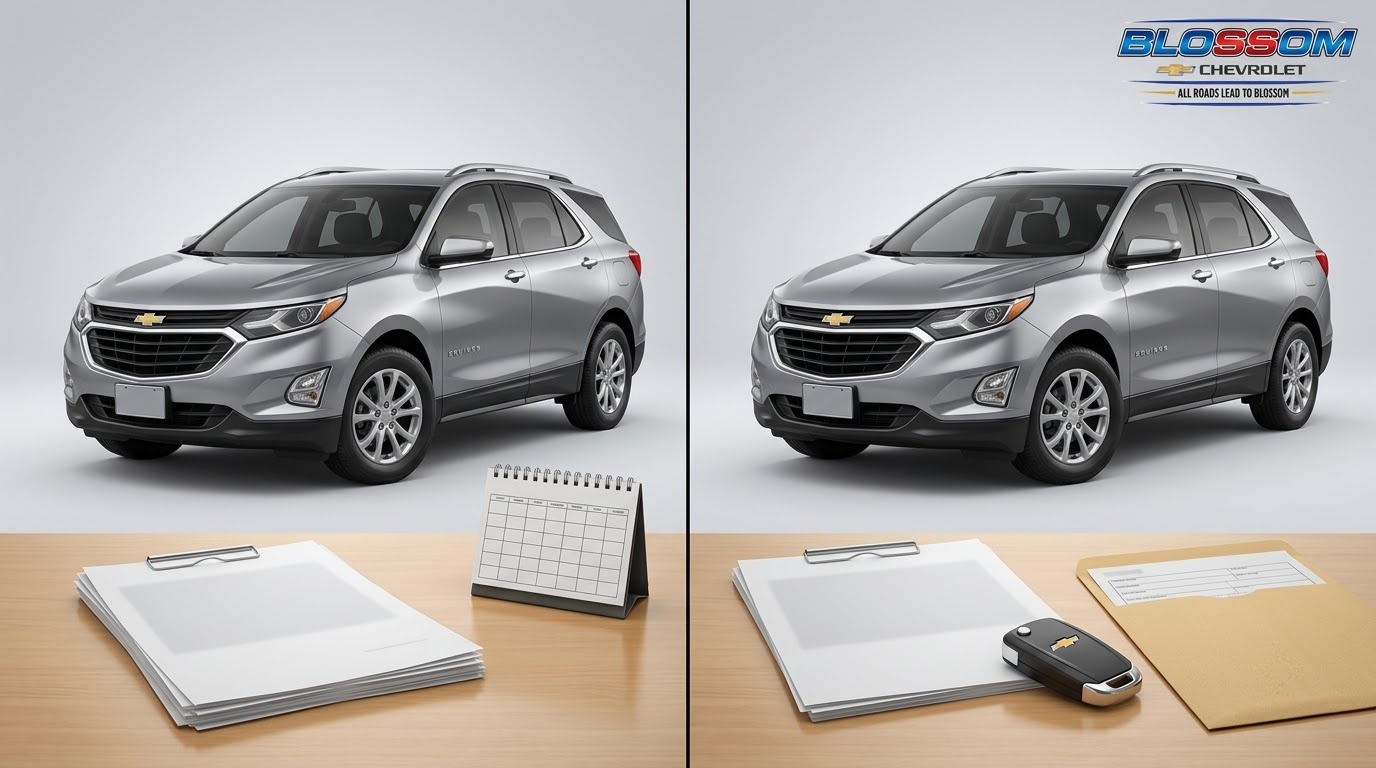
What's the Difference Between a Chevy Lease and Loan?
Leasing a Chevrolet means lower monthly payments and driving a newer vehicle every few years, but you don't own it and mileage is capped. Financing means higher monthly payments but you build equity and own the vehicle outright once the loan is paid off, with no mileage restrictions. The better option depends on how long you keep vehicles and how many miles you drive annually.
Leasing and financing get talked about like a simple either-or choice, but the right answer really comes down to your driving habits and how long you typically keep a vehicle. Here's how the two actually compare for Indianapolis buyers.
How Leasing Works
When you lease a Chevrolet, you're essentially paying for the vehicle's depreciation over the lease term, usually 24 to 39 months, rather than paying off the full purchase price. That's why lease payments are typically lower than loan payments on the same vehicle. At the end of the lease, you return the vehicle, though most leases include an option to buy it at a predetermined price if you've decided you want to keep it.
How Financing Works
Financing means taking out a loan to cover the full purchase price, then making payments, usually over 36 to 72 months, until the loan is paid off. Once it's paid off, you own the vehicle outright with no restrictions on mileage or modifications. Your monthly payment is generally higher than an equivalent lease, but you're building toward something you'll fully own.
Mileage Limits: The Biggest Lease Restriction
Leases typically cap annual mileage at 10,000, 12,000, or 15,000 miles, with higher mileage allowances available for a higher monthly payment. Going over your mileage limit means paying a per-mile overage fee at lease-end, which can add up quickly if you underestimated your actual driving. Indianapolis commuters with longer drives, especially those regularly driving outside Marion County for work, should calculate realistic annual mileage before choosing a lease.
Total Cost Over Time
Financing generally costs more upfront but less over the long run if you keep the vehicle for many years, since a paid-off vehicle costs you nothing beyond maintenance and insurance. Leasing keeps you in a cycle of ongoing payments, since you're typically leasing a new vehicle again every two to three years. If you like driving something new regularly, that ongoing cost might be worth it. If you'd rather stop making payments eventually, financing usually wins out.
Wear and Tear Considerations
Leased vehicles need to be returned in good condition, and lease agreements typically define what counts as normal wear versus excess wear that triggers additional charges. Financed vehicles you own outright don't have this concern, since any wear and tear is simply part of owning the vehicle long-term.
Which Option Fits Indianapolis Drivers Better
Leasing tends to make sense for drivers who want lower monthly payments, don't drive excessive mileage, and like having a newer vehicle with the latest features every few years. Financing tends to make more sense for drivers who put on higher mileage, want to eventually own the vehicle outright, or plan to keep their Chevrolet for five years or longer. Our Indianapolis finance team can run the numbers on both options side by side based on your actual driving habits, rather than a generic comparison.
Can You Switch From Leasing to Financing Later
Yes, many Chevy owners lease their first vehicle to try it out, then switch to financing on their next purchase once they know how many miles they actually drive. There's no penalty for changing your approach between vehicles, and our team can walk through what makes sense based on how your last lease or loan actually worked out for you.
FAQs
Is leasing a Chevrolet cheaper than financing?
Monthly payments are typically lower with leasing, but financing usually costs less overall if you keep the vehicle long-term, since you eventually own it outright.
What happens if I go over my mileage limit on a Chevy lease?
You'll typically pay a per-mile overage fee at lease-end, so it's worth choosing a mileage allowance that realistically matches your driving habits.
Can I buy my leased Chevrolet at the end of the lease term?
Yes, most leases include a purchase option at a predetermined price if you decide you want to keep the vehicle.
Do I own the vehicle if I finance instead of lease?
Yes, once your loan is paid off, you own the vehicle outright with no mileage restrictions or return requirements.
Is leasing or financing better for high-mileage Indianapolis drivers?
Financing usually makes more sense for high-mileage drivers, since leases charge overage fees for exceeding your mileage limit.
Can I switch from leasing to financing on my next Chevrolet?
Yes, there's no penalty for changing your approach between vehicles, and it's common for buyers to switch once they know their actual driving habits.